Heat exchanger coils are essential for the thermal regulation of railway coaches, contributing significantly to passenger comfort and the efficiency of HVAC (heating, ventilation, and air conditioning) systems. These coils enable the transfer of heat between multiple fluids, thereby facilitating effective temperature control within the limited environments of train cars.
Heat exchanger coils play a crucial role in railway coaches, enhancing both passenger comfort and overall system efficiency. With the progression of technology, these coils are evolving to become increasingly efficient, robust, and responsive, thereby maintaining railway travel as a comfortable and attractive option for transportation. Continuous innovations suggest a bright future for heat exchanger technology within rail systems, leading to improved travel experiences.
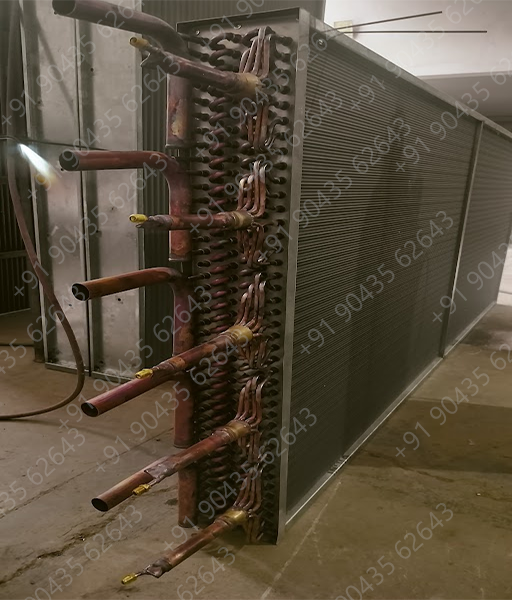
Railway coach heat exchanger coils are engineered to be both compact and efficient, optimizing heat transfer while reducing weight and spatial requirements. They are made from materials such as copper, aluminum, or stainless steel, selected for their superior thermal conductivity and corrosion resistance. The design frequently features finned surfaces to improve heat transfer efficiency, ensuring effective performance across a range of operational conditions.
These coils function by circulating a heating or cooling fluid—commonly water or refrigerant—through the coil system. As the fluid flows, it either absorbs or dissipates heat, thereby controlling the air temperature within the coach. This mechanism is crucial, particularly during extreme weather, as it guarantees passenger comfort regardless of external temperature fluctuations.
In railway coaches, heat exchanger coils are integral to the overall HVAC system. They are used in both heating and cooling applications. In winter, heated water flows through the coils, warming the air that is circulated into the coach. Conversely, in summer, chilled water or refrigerant cools the air, providing a comfortable environment for passengers.Modern railway systems often utilize advanced control systems that monitor temperature and humidity levels, adjusting the operation of the heat exchanger coils accordingly. This automation enhances energy efficiency and ensures a consistent and pleasant atmosphere within the coach.
Despite their effectiveness, heat exchanger coils face challenges such as fouling, corrosion, and maintenance. Regular inspections and cleaning are essential to ensure optimal performance and longevity. Innovations in materials and design—such as the use of advanced coatings and more efficient coil designs—are helping to overcome these challenges.The integration of smart technologies is also transforming heat exchanger performance. Sensors can now provide real-time data on temperature and fluid flow, enabling predictive maintenance and enhancing system reliability.

Request A Quote